Brake Warning Signs You Should Never Ignore
Brakes usually give warning before they fail. The signs you should never ignore include squealing or grinding noises, a spongy or low brake pedal, vibration when braking, the car pulling to one side, and a brake warning light. Any of these means it is time for a brake inspection.
Noises when braking
Sound is often the first warning. A high-pitched squeal usually comes from a wear indicator telling you the pads are getting low and need replacing soon.
A harsh grinding noise is more serious: it usually means the pads have worn through and metal is contacting the disc, which damages the discs and lengthens stopping distances. Stop driving on grinding brakes and get them checked, as continuing turns a pad job into a far costlier disc replacement.
How the pedal feels
The brake pedal tells you a lot about the system's health. Changes in how it feels are worth acting on quickly.
- A soft or spongy pedal can mean air or moisture in the brake fluid.
- A pedal that slowly sinks to the floor suggests a leak or master cylinder fault.
- Having to press much harder than usual is a clear warning sign.
Any of these needs a prompt brake inspection.
Vibration and pulling
If the car shudders through the pedal or steering wheel when you brake, especially from higher speeds, the discs are likely warped or unevenly worn.
If the car pulls to one side under braking, the brakes are working unevenly across the axle, perhaps from a sticking caliper. Both affect how safely and predictably the car stops, so have them looked at rather than getting used to them.
Warning lights and smells
A brake warning light may mean low fluid, worn pads on some cars, or a fault with the ABS or handbrake. Do not ignore it. A burning smell after braking can indicate overheating or a binding brake that is not releasing fully.
A binding brake also wastes fuel and can overheat to the point of damage, so a hot wheel or a smell of hot metal after a drive is worth investigating promptly rather than hoping it settles down.
The handbrake and parking brake
Do not overlook the handbrake. If it pulls up much higher than usual, fails to hold the car on a slope, or the electronic parking brake throws a warning, it needs attention as part of the braking system.
On cars with an electronic parking brake, faults can also affect rear brake servicing, so it is worth having a garage with the right equipment look at it. A parking brake that will not hold is both an MOT failure and a real hazard on Norfolk's many gentle hills and sloping driveways.
Why you should act quickly
Brakes are the system you rely on most, and brake problems rarely fix themselves; they get worse and more expensive. A set of pads caught early is a routine job, but ignored until they grind, you are looking at discs too.
When in doubt, get them checked. We offer free visual brake checks and will tell you honestly what, if anything, needs doing, and what can safely wait. There is no upselling, just a clear picture of your brakes' condition.
Frequently Asked Questions
Why are my brakes squealing?
A persistent high-pitched squeal usually comes from the pad wear indicator, a small metal tab designed to make noise when the pads get low. It is a prompt to replace them soon. Occasional light squeal in damp weather can be normal, but constant squealing should be checked.
Is it safe to drive with grinding brakes?
No. Grinding usually means the pads have worn away and metal is grinding on the disc. This badly reduces braking performance, damages the discs and can be dangerous. Stop driving on grinding brakes and have them inspected as soon as possible to stay safe.
Why does my brake pedal feel spongy?
A spongy pedal often means air or moisture has got into the brake fluid, or there is a hydraulic problem. It reduces braking effectiveness and should be checked promptly. The fix may be as simple as a brake fluid change, but it needs inspecting to be sure.
What does a burning smell when braking mean?
A burning or hot-metal smell after braking can mean the brakes are overheating or a caliper is binding and not releasing fully. This wastes fuel and can damage the brakes. If a wheel feels hot or you smell hot metal after a drive, have it checked promptly.
Should I worry if my handbrake pulls up high?
Yes, it is worth checking. A handbrake that travels much higher than usual or fails to hold the car on a slope needs adjustment or repair. A parking brake that will not hold is an MOT failure and a safety risk, so do not leave it once you notice the change.
Book With Norwich Tyres & Auto Service
Need a hand from a real, independent Norwich garage? Call 07933 900901 or pop into Ber Street, NR1 3ES. Same-day tyre fitting is available on most common sizes, with free parking on site.
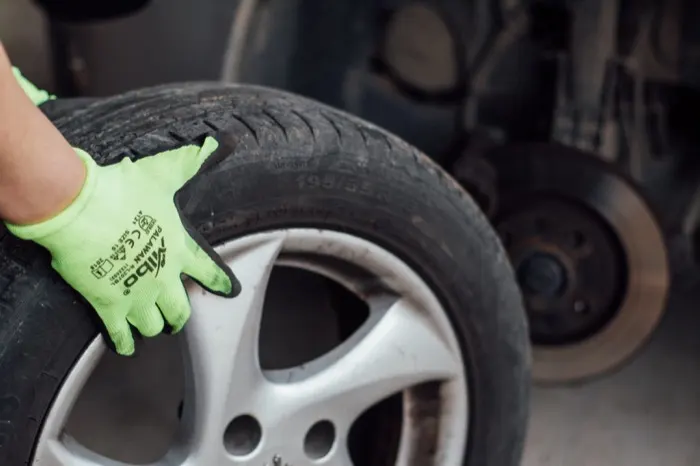
Hero image: “Person holding a wheel with car brake disc and axle visible in the blurry background. Mounting a wheel on a car” by Ivan Radic (source), licensed under CC BY.