
Christmas Getaway: A Long-Distance Driving Safety Checklist
A safe Christmas getaway starts with a pre-trip check of tyres, fluids, battery, brakes and lights, plus some planning: check the forecast, plan your route, allow extra time for traffic and weather, and pack a winter emergency kit. Long winter drives combine tiredness, darkness and bad weather, so preparation matters.
Check the car before you go
The festive period brings some of the busiest roads of the year, often in poor weather, so a sound car is essential. Run through the basics the day before, not as you leave.
- Tyre tread, pressures (laden setting) and the spare.
- Engine oil, coolant and screenwash topped up.
- Battery health, especially if it has felt sluggish.
- All lights working and wipers in good condition.
Plan the journey
A little planning avoids a lot of stress. Check the weather forecast and traffic for your route, and have an alternative in mind if conditions are bad.
Allow plenty of extra time so you are not tempted to rush in poor conditions, and tell someone your route and expected arrival time, which is sensible for winter travel on quieter roads where help may be further away.
Pack for winter
Long winter journeys can be disrupted by weather or breakdowns, so carry a winter emergency kit. Warm layers, a blanket, water, snacks, a torch, a power bank and a hi-vis vest cover the essentials.
If you get delayed in traffic or stuck in bad weather, these items keep you safe and comfortable until you can get moving again. Keep at least half a tank of fuel too, as festive traffic jams can be long.
Loading the car for the holidays
Christmas trips often mean a fully loaded car with presents, luggage and sometimes the whole family. Distribute weight evenly, keep heavy items low, and do not block your rear view or pile things on the parcel shelf where they become projectiles in a sudden stop.
Use the laden tyre pressures from your handbook for the extra weight, and if you are using a roof box, check the load limit and that your lights and number plate stay visible. A well-loaded car handles and brakes far better than an overloaded, badly packed one.
Stay alert on the road
Tiredness is a major risk on long drives, made worse by dark winter afternoons and a warm cabin. Take a break of at least fifteen minutes every two hours, and share the driving if you can.
Avoid setting off exhausted after a late finish, keep the cabin cool and well ventilated rather than cosy and drowsy, and stop if you feel your concentration slipping. No journey is worth falling asleep at the wheel.
Sort problems before you travel
If your car is due a service or your tyres are marginal, deal with it before the trip, not after a breakdown far from home over the holidays when garages may be closed.
We can carry out a service or safety check and fit tyres before you travel, so book ahead. Going into a long festive drive with a freshly checked car is the best present you can give yourself.
Frequently Asked Questions
What should I check before a long Christmas drive?
Check tyre tread and pressures including the spare, top up oil, coolant and screenwash, make sure the battery is healthy and all lights and wipers work. Then plan your route, check the forecast, allow extra time and pack a winter emergency kit in case of delays.
How often should I stop on a long drive?
Take a break of at least fifteen minutes every two hours to stay alert, more often if you feel tired. Winter afternoons get dark early and warm cabins make drowsiness worse, so do not push on when tired. Sharing the driving also helps on long festive journeys.
Should I service my car before travelling at Christmas?
If a service is due or close, doing it before a long winter trip is wise, as it catches worn brakes, tyres, low fluids and battery issues before they strand you far from home when garages may be closed. A quick pre-trip safety check is a good alternative if a full service is not yet due.
How should I load the car for a Christmas trip?
Distribute weight evenly, keep heavy items low, and do not block your rear view or pile loose items on the parcel shelf. Use the laden tyre pressures for the extra weight, and if using a roof box, observe its load limit and keep your lights and number plate visible.
How much fuel should I keep on a winter journey?
Keep at least half a tank during cold spells and busy festive periods. Long traffic jams, diversions or getting stuck in bad weather can use far more fuel than expected, and you may want to run the engine occasionally for heat if you are stranded, so do not set off nearly empty.
Book With Norwich Tyres & Auto Service
Need a hand from a real, independent Norwich garage? Call 07933 900901 or pop into Ber Street, NR1 3ES. Same-day tyre fitting is available on most common sizes, with free parking on site.
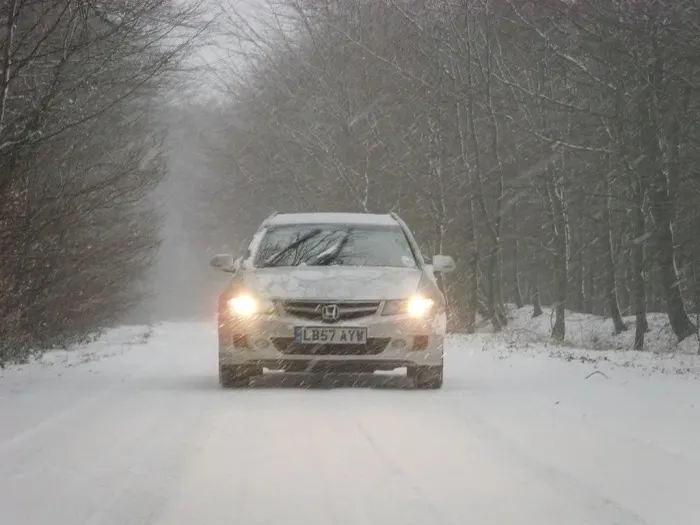
Hero image: “Second Honda Accord in the snow, February 2009.” by charles cars (source), licensed under CC BY.