
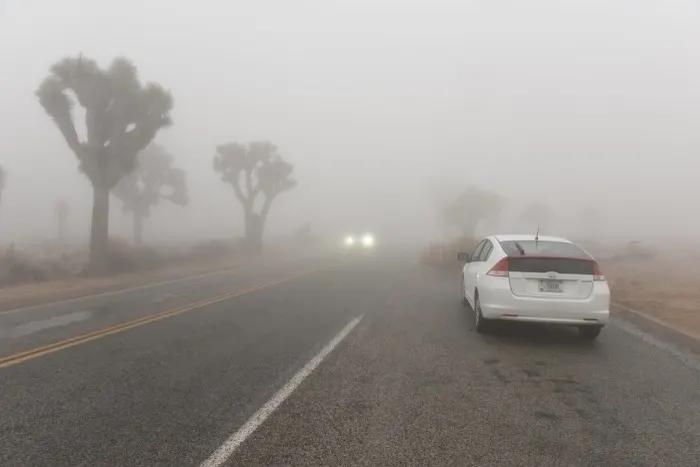
Driving in Fog on Norfolk's Country Roads: Safety Tips
To drive safely in fog, slow right down, use dipped headlights and switch on fog lights only when visibility drops below about 100 metres. Leave a much larger gap than usual, avoid using full beam, and use the road markings to guide you. Norfolk's flat, open country roads can fog over quickly, so stay alert.
Slow down and increase your gap
Fog hides hazards until they are close, so the single most important thing is to reduce speed to a point where you can stop within the distance you can clearly see.
Leave a much bigger gap to any vehicle ahead. Tailgating in fog is extremely dangerous, because if the car in front stops suddenly you have very little time to react on a slippery, low-visibility road.
Using your lights correctly
Lights in fog need care, as the wrong choice makes things worse.
- Use dipped headlights so you are visible without dazzling.
- Switch on fog lights only when visibility drops below about 100 metres.
- Never use full beam: the fog reflects the light straight back at you.
- Turn fog lights off when visibility improves to avoid dazzling others.
Staying oriented on country roads
On Norfolk's unlit rural roads, fog can make it hard to judge bends and junctions. Use the road markings, cat's eyes and the kerb or verge edge to guide you rather than fixing on the lights of the car ahead.
Following another car's tail lights too closely gives a false sense of the road and tempts you to drive too fast for the conditions. Keep your own safe distance and read the road for yourself.
At junctions and in patchy fog
Take extra care at junctions, where fog makes it hard to see approaching traffic. Wind down a window to listen, edge forward slowly, and only pull out when you are sure it is clear.
Fog is often patchy, especially near rivers, the Broads and low-lying fields, so do not speed up the moment it lifts, as you may drive straight into another thick bank. Treat clear patches with caution and stay ready to slow again.
Demisting and a clear screen
Fog often comes with damp that mists up the inside of your windows. Use the demister and air conditioning to clear the screen quickly, and keep the glass clean so condensation clears faster and glare is reduced.
If your air conditioning is not working, demisting takes much longer, which is a real safety issue in fog. It is one more reason to keep the air con in good order, as it earns its keep in winter as well as summer.
Prepare the car for foggy season
Good fog driving starts before you set off. Make sure all your lights work and are clean, your wipers and screenwash are up to the job, and your tyres and brakes are in good condition for the wet, low-grip roads fog often brings.
If you are not sure your lights, tyres or brakes are ready for the season, we are happy to check them. Going into the foggy months with the car properly prepared lets you focus on driving carefully rather than worrying about the car.
Frequently Asked Questions
When should I use fog lights?
Use fog lights only when visibility falls below around 100 metres, and turn them off once conditions improve. Leaving them on in clear or light conditions dazzles other drivers and can hide your brake lights. Front and rear fog lights are for genuinely poor visibility only.
Why should I not use full beam in fog?
Full beam in fog reflects off the water droplets and bounces straight back at you, creating a wall of glare that reduces visibility rather than improving it. Always use dipped headlights in fog, adding fog lights when visibility drops below about 100 metres.
How far back should I drive in fog?
Leave a much larger gap than normal, big enough to stop within the distance you can clearly see. Fog hides sudden stops until the last moment, so tailgating is very dangerous. Never rely on the tail lights of the car ahead to judge your speed or the road.
How do I stop my windscreen misting up in fog?
Use the demister and air conditioning, which dries the air and clears the screen quickly, and keep the glass clean so condensation clears faster. If your air con is not working, demisting takes far longer, so it is worth keeping it in good order for winter driving.
Is fog worse on Norfolk country roads?
Fog often forms and lingers over low-lying ground, rivers, the Broads and open fields, all common in Norfolk, and rural roads are unlit and frequently patchy with fog. That makes slowing down, correct light use and reading the road edge especially important on local country roads.
Book With Norwich Tyres & Auto Service
Need a hand from a real, independent Norwich garage? Call 07933 900901 or pop into Ber Street, NR1 3ES. Same-day tyre fitting is available on most common sizes, with free parking on site.