
How Often Should You Service Your Car?
Most cars should be serviced every 12 months or at a set mileage, whichever comes first, with the exact schedule set by the manufacturer in your handbook. Many drivers alternate a smaller interim service with a full service. Regular servicing keeps the car reliable, catches problems early and helps protect its value.
Time or mileage, whichever comes first
Service intervals are usually given as both a time and a mileage, such as every 12 months or every 12,000 miles, and you act on whichever you reach first.
This matters because low-mileage cars still need servicing on time. Oil and fluids degrade with age as well as use, so a car that does few miles should not skip its annual service just because the mileage is low.
Interim and full services
Many garages offer different levels of service to match how the car is used.
- An interim service, often every six months or 6,000 miles for high-mileage drivers, covers oil and key checks.
- A full service, usually annually, is more thorough and covers more components.
- Your handbook may also specify major services with extra items at longer intervals.
We can advise which suits your car and mileage.
Why regular servicing pays off
Servicing is not just about the engine oil. A good service checks brakes, tyres, suspension, fluids and more, catching wear and faults before they become breakdowns or expensive repairs.
It also keeps a documented history, which protects your car's resale value, and helps maintain efficiency and reliability. Skipping services to save money usually costs more later when a neglected problem finally bites.
Manufacturer schedules and variable servicing
Some modern cars use variable or condition-based servicing, where the car calculates when a service is due based on how it has been driven, rather than a fixed interval. The dashboard tells you when it is needed, which can be sooner or later than a year.
Whether your car uses fixed or variable servicing, the handbook is the authority. Following the maker's schedule keeps the car healthy and, on newer cars, can be important for any remaining warranty, so it is worth knowing which system yours uses.
High-mileage and older cars
How you use the car shapes what it needs. High-mileage drivers benefit from an interim service between full ones to keep the oil fresh and catch wear sooner, given how much they are asking of the car.
Older cars and those used mainly for short, stop-start trips also reward regular attention, as short journeys are surprisingly hard on oil, batteries and exhausts. A consistent service routine keeps an older car reliable for far longer than a neglected one.
Servicing versus the MOT
Servicing and the MOT are different things. The MOT is an annual legal test of roadworthiness, while a service is preventative maintenance that keeps the car running well and catches issues early.
A car can pass its MOT and still be overdue a service. We offer interim and full vehicle servicing for all makes, so get in touch to book yours and keep on top of both.
Frequently Asked Questions
How often does a car need servicing?
Most cars need a service every 12 months or at a set mileage, whichever comes first, with the exact figures in your handbook. High-mileage drivers may benefit from an interim service in between. Low-mileage cars should still be serviced annually, as oil and fluids degrade with age.
Is servicing the same as an MOT?
No. The MOT is an annual legal test of roadworthiness and emissions, while a service is preventative maintenance that keeps the car running well and catches wear early. A car can pass its MOT yet still be overdue a service, so the two are separate and both matter.
What happens if I skip a service?
Skipping services lets small problems go unnoticed until they become bigger, more expensive repairs or breakdowns. It can also reduce efficiency and reliability, and gaps in the service history lower the car's resale value. Regular servicing is usually cheaper overall than catching up after a fault.
What is variable or condition-based servicing?
Some modern cars calculate when a service is due based on how they have been driven, rather than a fixed interval, and tell you on the dashboard. It can be sooner or later than a year. Your handbook explains which system your car uses, and following it keeps the car healthy.
Do low-mileage cars still need servicing?
Yes. Oil and fluids degrade with age as well as use, brakes can seize from standing, and short trips are hard on the car, so a low-mileage car still needs its annual service. Acting on time rather than mileage keeps it reliable and protects its value.
Book With Norwich Tyres & Auto Service
Need a hand from a real, independent Norwich garage? Call 07933 900901 or pop into Ber Street, NR1 3ES. Same-day tyre fitting is available on most common sizes, with free parking on site.
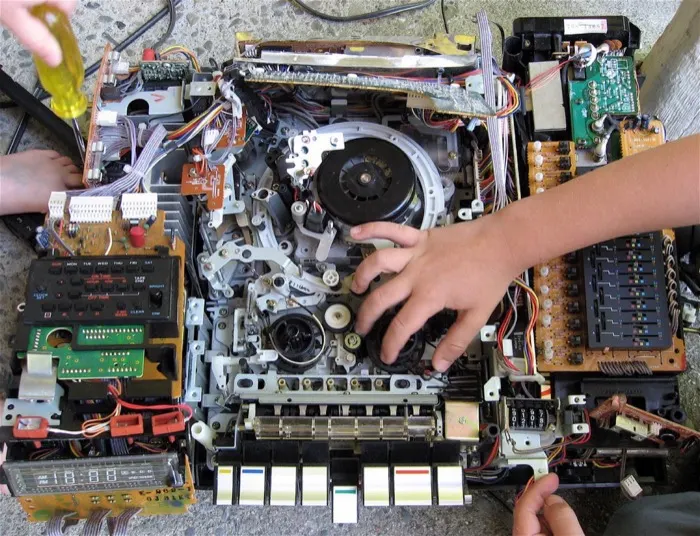
Hero image: “Betamax” by jurvetson (source), licensed under CC BY.