
Looking After an EV Battery in Cold Weather
Electric car range naturally drops in cold weather, often noticeably, because low temperatures slow the battery's chemistry and cabin heating draws a lot of energy. This is normal, not a fault. You can preserve range by pre-conditioning the car while it is plugged in, using seat and steering-wheel heaters, and keeping tyres correct.
Why EV range drops in winter
It surprises some new EV drivers, but a noticeable winter range drop is completely normal. There are two main reasons. First, cold temperatures slow the chemical reactions inside the battery, so it cannot deliver or accept energy as efficiently.
Second, and often bigger, cabin heating uses a lot of energy. A petrol car heats the cabin with waste engine heat for free, but an EV has to make that heat from the battery, which eats into range, especially on short trips.
Pre-condition while plugged in
The single most effective winter habit is pre-conditioning: warming the battery and cabin while the car is still plugged in, using mains power rather than the battery. Most EVs let you schedule this or trigger it from an app before you leave.
You set off with a warm cabin and a battery at a better temperature, so less range is spent heating things once you are driving. Pre-conditioning also makes charging faster, as a warm battery accepts charge more readily than a cold one.
Heat the person, not just the cabin
Cabin heating is the big range drain, so use the more efficient options where you can. Heated seats and a heated steering wheel warm you directly using far less energy than heating the whole cabin to a high temperature.
- Use seat and steering-wheel heaters as your main warmth.
- Keep cabin heat moderate rather than blasting it.
- Many EVs have an eco or heat-pump mode that uses less energy.
Dressing warmly helps too, letting you keep the cabin cooler.
Charging and battery care in the cold
Cold affects charging as well as range: a cold battery charges more slowly, especially on rapid chargers, which is another reason pre-conditioning helps. Where possible, plug in overnight so the battery is not sitting deeply discharged in the cold.
Following the maker's guidance on charging levels, and not routinely leaving the battery at very low charge in freezing conditions, helps protect long-term battery health. Modern EVs manage their batteries well, but a few sensible habits help.
Don't forget the tyres
EVs are heavy and hard on tyres, and in winter the basics still apply. Correct tyre pressures matter even more, both for safety and because under-inflation increases rolling resistance and further reduces range, which is the last thing you want in the cold.
Tyre pressure also drops in cold weather, so check it more often through winter. Good tread is essential for grip on wet and icy roads, and many EVs benefit from all-season or winter-capable tyres for the colder months.
Plan for the cold, do not worry about it
The winter range drop is predictable, so the key is to plan around it rather than be caught out: expect less range, charge a little more often, and pre-condition before journeys. Treated this way, it is a manageable quirk, not a fault.
If you would like your EV's tyres checked or fitted for winter, with the correct load rating for the car's weight, we are happy to advise. Looking after the tyres is one practical thing that helps both safety and range in the cold.
Frequently Asked Questions
Why does my electric car lose range in winter?
It is normal, not a fault. Cold slows the battery's chemistry so it works less efficiently, and cabin heating draws a lot of energy, since an EV must make heat from the battery rather than using free waste engine heat like a petrol car. Both reduce range, especially on short trips.
What is pre-conditioning and does it help?
Pre-conditioning warms the battery and cabin while the car is still plugged in, using mains power rather than the battery, usually scheduled or triggered from an app. You set off with a warm cabin and battery, spending less range heating things while driving, and it also speeds up charging.
How can I save EV range in the cold?
Pre-condition while plugged in, use heated seats and a heated steering wheel rather than blasting cabin heat, keep cabin temperature moderate, use any eco or heat-pump mode, and keep tyres correctly inflated. Dressing warmly lets you keep the cabin cooler and save more range.
Does cold weather damage an EV battery?
Modern EVs manage their batteries well, but sensible habits help long-term health: plug in overnight rather than leaving the battery deeply discharged in the cold, follow the maker's charging guidance, and pre-condition before rapid charging, as a cold battery charges slowly.
Do EV tyres matter in winter?
Yes. EVs are heavy and hard on tyres, so correct pressures matter even more for safety and range, and pressure drops in the cold, so check it more often. Good tread is essential for wet and icy grip, and many EVs benefit from all-season or winter-capable tyres for the colder months.
Book With Norwich Tyres & Auto Service
Need a hand from a real, independent Norwich garage? Call 07933 900901 or pop into Ber Street, NR1 3ES. Same-day tyre fitting is available on most common sizes, with free parking on site.
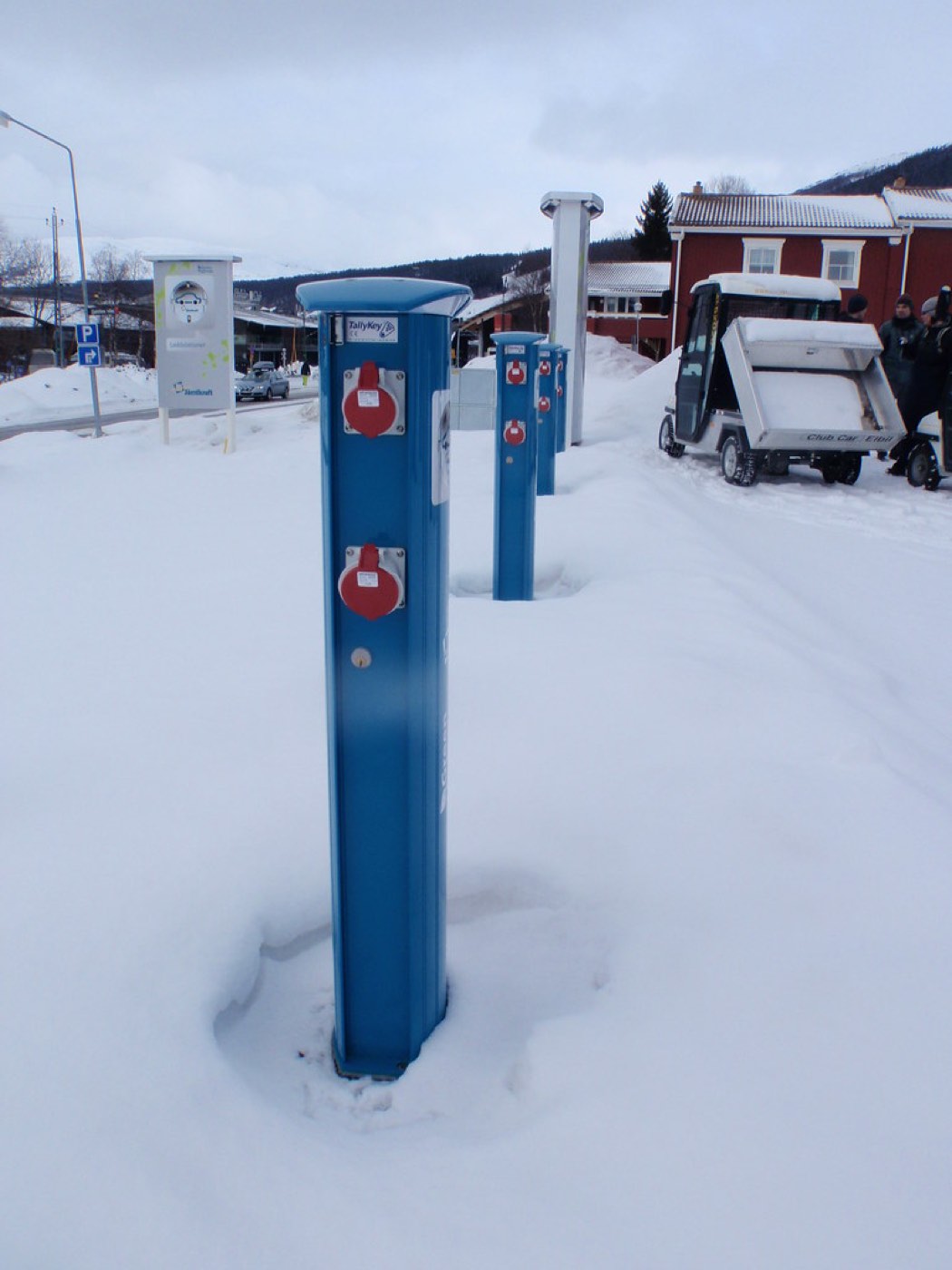
Hero image: “Electric car charging point, Åre, Sweden” by Guttorm Flatabø (source), licensed under CC BY.