
Eco Tyres Explained: Do Low Rolling Resistance Tyres Save Fuel?
Eco tyres, also called low rolling resistance tyres, are designed to roll with less effort, so the engine uses less fuel to keep the car moving. The fuel saving is genuine but modest, adding up most for high-mileage drivers. The EU tyre label's fuel-efficiency rating (A to E) lets you compare options.
What rolling resistance is
Rolling resistance is the energy lost as a tyre flexes and grips while it rolls. The more a tyre flexes, the more energy it wastes as heat, and the harder the engine has to work to maintain speed.
Eco tyres use special compounds and constructions that flex less and roll more freely, reducing that wasted energy. Lower rolling resistance means a little less fuel burned for the same journey, which is where the saving comes from.
How much fuel do they really save?
The honest answer is that the saving is real but modest for most drivers. The difference shows up over many miles rather than on a single trip, so the higher your annual mileage, the more an eco tyre pays back.
For a low-mileage town car, the saving may be small; for a high-mileage motorway commuter, it adds up more meaningfully over the life of the tyres. It is a worthwhile bonus rather than a dramatic transformation.
Reading the tyre label
You do not have to guess a tyre's efficiency. The EU tyre label rates fuel efficiency on a scale from A (best) to E, alongside wet grip and noise ratings.
- A higher fuel-efficiency grade means lower rolling resistance.
- Compare the grade between tyres of the same size to judge potential savings.
- Do not sacrifice the wet-grip rating just to chase fuel economy.
The trade-offs
Eco tyres are a balance, like any tyre. Historically, chasing the lowest rolling resistance could slightly reduce grip or tread life, though modern eco tyres manage this far better than early ones.
The key is not to prioritise the fuel rating so highly that you accept poor wet grip, which is the safety-critical rating. A good eco tyre offers strong fuel efficiency without compromising wet braking, and that balance is what to look for.
Eco tyres and electric cars
On electric and hybrid cars, low rolling resistance does double duty: as well as efficiency, it helps preserve driving range, since the battery works less to keep the car rolling. That is why many EVs come on eco-focused tyres as standard.
If you drive an EV and want to protect your range, the tyre's rolling resistance is genuinely worth considering, alongside the correct load rating for the car's extra weight. We can advise on suitable options for your electric or hybrid car.
The biggest fuel saver is free
Whatever tyres you fit, the single biggest tyre-related fuel saver costs nothing: keeping your pressures correct. Under-inflated tyres dramatically increase rolling resistance and waste fuel, easily wiping out the benefit of an eco tyre.
So check your pressures monthly, choose a tyre with a good fuel-efficiency and wet-grip balance, and you get the best of both. Ask us about eco tyre options and we will help you weigh up the label ratings for your driving.
Frequently Asked Questions
Do eco tyres really save fuel?
Yes, but modestly. Low rolling resistance tyres let the car roll with less effort, so the engine uses a little less fuel. The saving shows up over many miles rather than a single trip, so it adds up most for high-mileage drivers and is a worthwhile bonus rather than a dramatic change.
How do I tell if a tyre is fuel-efficient?
Check the EU tyre label's fuel-efficiency rating, which runs from A (best) to E. A higher grade means lower rolling resistance and better economy. Compare the grade between tyres of the same size, but do not sacrifice the wet-grip rating, which is safety-critical, just to chase fuel savings.
Do eco tyres have worse grip?
Modern eco tyres manage the balance well, so a good one offers strong fuel efficiency without compromising wet grip. The key is not to prioritise the fuel rating so highly that you accept a poor wet-grip grade. Look for a tyre that scores well on both rather than just one.
Are eco tyres good for electric cars?
Yes. On electric and hybrid cars, low rolling resistance helps preserve driving range as well as saving energy, which is why many EVs come on eco-focused tyres. If you drive an EV, the tyre's rolling resistance is worth considering, along with the correct load rating for the extra weight.
What saves more fuel, eco tyres or correct pressure?
Correct tyre pressure. Under-inflated tyres dramatically increase rolling resistance and waste fuel, easily wiping out the benefit of an eco tyre. So check your pressures monthly first, then choose a tyre with a good fuel and wet-grip balance for the best of both.
Book With Norwich Tyres & Auto Service
Need a hand from a real, independent Norwich garage? Call 07933 900901 or pop into Ber Street, NR1 3ES. Same-day tyre fitting is available on most common sizes, with free parking on site.
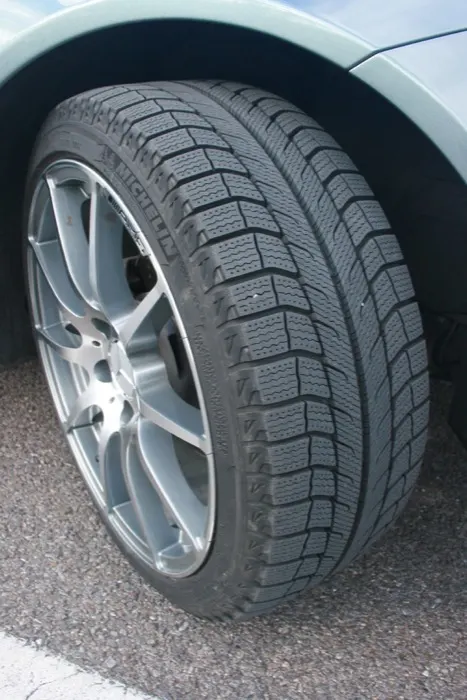
Hero image: “My new Michelin 'winter' Tyres” by Supermac1961 (source), licensed under CC BY.