
The 20p Test: How to Check Your Tyre Tread Depth at Home
To check your tyre tread depth at home, push a 20p coin into the main grooves: if the raised outer band of the coin stays hidden, your tread is likely above the safe minimum. If you can see that band, your tyres are close to the 1.6mm UK legal limit and should be measured properly.
How the 20p test works
The 20p test is the simplest way to check tread without any tools. A 20p coin has a raised border around its edge that sits roughly 3mm in from the rim, which is a useful safety margin above the legal minimum.
Place the coin into the deepest part of the main tread grooves at several points across the tyre. If the outer band of the coin is hidden by the tread, there is plenty of rubber left. If the band is visible, your tread may be getting low and it is worth having the tyre measured with a proper depth gauge.
It takes less than a minute per tyre and costs nothing. Keep a 20p in the door pocket and make it part of your routine, ideally alongside your monthly pressure check.
What is the legal tread depth in the UK?
The legal minimum tread depth for car tyres in the UK is 1.6mm, measured across the central three-quarters of the tyre and around its entire circumference. This applies to cars, vans and light trailers.
Tread below this limit is illegal and dangerous because it cannot clear water effectively, which increases stopping distances in the wet and the risk of aquaplaning. The figure is a legal minimum, not a target to aim for, so do not run tyres right down to it.
Where to check on each tyre
Always check tread in several places, not just one. Tyres often wear unevenly, with one edge or the centre wearing faster than the rest.
- Check the inner edge, the centre and the outer edge of each tyre.
- Uneven wear across the width usually points to incorrect pressure or a wheel alignment problem.
- Feathering or one-sided wear is worth getting checked, as it shortens tyre life and affects handling.
If you spot uneven wear, our team can check your pressures and wheel alignment to find the cause before it ruins the tyre.
Using a proper tread depth gauge
For an exact reading, a tread depth gauge is more accurate than the coin test and costs only a few pounds. Press the probe into the main groove and read the millimetre measurement directly.
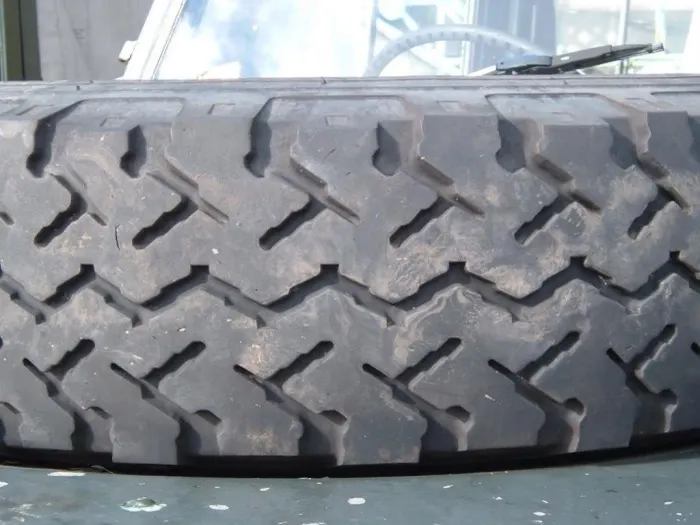
Modern tyres also have built-in tread wear indicators: small raised bars set into the grooves at 1.6mm. When the surrounding tread wears down level with these bars, the tyre is at the legal limit and must be replaced. We use calibrated gauges during every free tyre check at our Norwich garage.
When should you replace your tyres?
You must replace a tyre before it reaches 1.6mm, but many safety organisations including TyreSafe recommend changing tyres at around 3mm, because wet grip drops off noticeably below that point. Waiting until the legal limit leaves no margin for safety.
Also replace tyres showing cracks, bulges, exposed cords or repeated slow punctures, regardless of tread. If in doubt, pop into our Ber Street garage for a free visual tyre check and an honest opinion.
Why tread depth matters most in the wet
Tread exists almost entirely to deal with water. The grooves channel water out from under the tyre so the rubber can grip the road; on a dry road even a worn tyre grips reasonably well, which is why low tread can go unnoticed until it rains.
As tread wears down, the grooves move less water and wet braking distances grow significantly. In a wet Norfolk winter, that extra margin from healthy tread can be the difference between stopping in time and not. It is the single biggest reason to check regularly and replace early.
Frequently Asked Questions
Is the 20p test accurate enough?
The 20p test is a reliable quick check between professional inspections, not a precise measurement. If the coin's outer band shows when inserted into the tread, have the tyre measured with a depth gauge to confirm whether it is still legal and safe.
How often should I check my tyre tread?
Check your tread at least once a month and before any long journey, along with your tyre pressures. Regular checks catch wear and damage early, which is safer and cheaper than waiting for an advisory or a failure.
Can I be fined for low tread?
Yes. Driving with tyres below the 1.6mm legal limit can mean a fine of up to £2,500 and 3 penalty points for each illegal tyre. With four worn tyres that could be a licence-losing 12 points, so it is well worth checking regularly.
What are the little bars in my tyre grooves?
Those are tread wear indicators, small raised bars moulded into the main grooves at 1.6mm. When the tread wears down level with them, the tyre has reached the legal limit and must be replaced. They are a handy visual warning between proper measurements.
Do front and rear tyres wear at the same rate?
Usually not. On most cars the front tyres wear faster because they handle steering and much of the braking and, on front-wheel-drive cars, the power too. That is why you should check all four individually rather than assuming they are all the same.
Book With Norwich Tyres & Auto Service
Need a hand from a real, independent Norwich garage? Call 07933 900901 or pop into Ber Street, NR1 3ES. Same-day tyre fitting is available on most common sizes, with free parking on site.
Hero image: “Landrover London to Brighton run 9” by Elsie esq. (source), licensed under CC BY.