
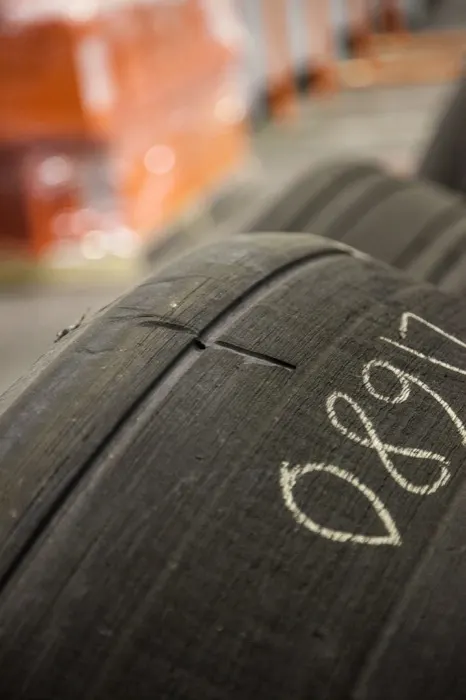
How to Spot an Illegal or Dangerous Tyre
You can spot most illegal or dangerous tyres with a careful look. Warning signs include tread below the 1.6mm legal limit, bulges or lumps in the sidewall, cracks or perished rubber, exposed cords, deep cuts and uneven wear. Any bulge or exposed cord means the tyre should be replaced immediately.
Low or uneven tread
Start with tread depth using the 20p test across the full width of each tyre. Tread below 1.6mm is illegal and dramatically reduces wet grip.
Uneven wear is also a red flag. Wear on one edge often means an alignment problem, while centre or edge wear can mean incorrect pressures. Even if tread is legal, uneven wear is worth investigating before it takes the tyre below the limit on one side.
Bulges, lumps and cuts
A bulge or lump in the sidewall means the internal structure has been damaged, usually from hitting a kerb or pothole. The tyre can fail suddenly, so it must be replaced without delay.
- Bulges or blisters on the sidewall or tread.
- Deep cuts that reach the cords beneath the rubber.
- Any visible cords or canvas showing through.
If you find any of these, avoid driving on the tyre and have it changed.
Cracking and ageing
Look for fine cracks in the sidewall and between the tread blocks, which indicate the rubber is perishing with age and exposure. This is common on older or low-mileage cars.
A tyre can have plenty of tread but still be unsafe if it has aged. Checking the DOT date code on the sidewall tells you how old it is, and tyres several years old deserve a closer look even if the tread is fine.
Embedded objects and slow punctures
Run your hand carefully around the tread and look for nails, screws or shards of glass embedded in the rubber. A small object can cause a slow puncture that gradually deflates the tyre and triggers the pressure warning light.
Do not pull a nail out yourself, as it may be the only thing sealing the hole; instead, bring the tyre to us. Many punctures in the central tread can be safely repaired, which is far cheaper than replacement, but only if the tyre has not been driven on while flat.
Valve and bead problems
Not every tyre fault is in the tread or sidewall. A perished or damaged valve can leak air, and corrosion where the tyre seals against an alloy rim (the bead) can cause a persistent slow leak that no amount of pumping fixes.
If a tyre repeatedly loses pressure with no obvious puncture, the valve or bead seal is a likely cause. These are quick, inexpensive things for us to check and put right, and worth investigating before assuming you need a whole new tyre.
When to get it checked
If you spot any of these signs, or you are simply not sure, bring the car in for a free visual tyre check. It takes a few minutes and could prevent a roadside failure.
We will tell you honestly whether a tyre is safe, needs replacing, or just needs a pressure or alignment adjustment. There is never any obligation to buy, and we would always rather catch a problem early than see it fail on the road.
Frequently Asked Questions
Is a bulge in my tyre dangerous?
Yes, very. A bulge means the internal structure has been damaged and the tyre could fail suddenly at speed. It cannot be repaired and must be replaced as soon as possible. Avoid motorway driving until it is changed, as a high-speed blowout is a serious risk.
Can I drive on a cracked tyre?
Light surface crazing may be cosmetic, but deeper cracks mean the rubber is perishing and the tyre is weakening. Because it is hard to judge severity by eye, have cracked tyres inspected. If the cracking is significant or the tyre is old, replace it.
What does uneven tyre wear tell me?
Uneven wear points to an underlying cause. Wear on one edge usually means the alignment is out; wear in the centre suggests over-inflation, and both edges suggests under-inflation. Fixing the cause, such as alignment or pressures, stops you wearing out replacement tyres the same way.
Should I pull a nail out of my tyre?
No. The nail may be sealing the hole, so pulling it out can turn a slow leak into a fast one. Leave it in place, keep the tyre inflated if you can, and bring it to us. Many tread-area punctures can be safely repaired rather than needing a new tyre.
How can a tyre be legal but still unsafe?
A tyre can have legal tread yet be unsafe if the rubber has aged and perished, if it has hidden internal damage from a kerb or pothole, or if it is the wrong specification for the car. That is why condition and age matter as much as tread depth.
Book With Norwich Tyres & Auto Service
Need a hand from a real, independent Norwich garage? Call 07933 900901 or pop into Ber Street, NR1 3ES. Same-day tyre fitting is available on most common sizes, with free parking on site.
Hero image: “Detail of a damaged tyre” by realmcflier (source), licensed under CC BY.