
Dashboard Warning Lights Explained
Dashboard warning lights are colour-coded by urgency. Red usually means stop safely as soon as you can and address the problem, while amber or yellow means get it checked soon but you can usually drive on with care. A red oil pressure, temperature or brake warning light should be treated as urgent.
What the colours mean
Warning lights follow a simple colour code, like traffic lights, which tells you how urgent they are.
- Red means a serious problem: stop safely as soon as you can and act.
- Amber or yellow means something needs attention or checking soon.
- Green or blue is informational, simply telling you a system is on.
If a red light appears, do not ignore it.
Red lights to act on immediately
Some red lights warn of problems that can quickly cause serious, expensive damage if you keep driving.
A red oil pressure light or an engine temperature warning means you should stop safely and switch off, as continuing can wreck the engine. A red brake warning light can mean low fluid or a fault, and must never be ignored given how vital braking is.
Amber lights to check soon
Amber lights are less immediately critical but still need attention. The engine management or check engine light, for example, means the car has detected a fault worth investigating.
The tyre pressure light, ABS light and others fall into this group. You can usually drive on carefully, but get the cause diagnosed soon rather than leaving it, as small faults can grow into bigger, costlier ones.
The lights you should never ignore
A few lights deserve special caution. The oil pressure light (an oil-can symbol) means the engine may not be getting enough oil, and continuing can destroy it within minutes, so stop as soon as it is safe.
The temperature warning means the engine is overheating, which can cause major damage, so stop and let it cool. The brake warning light can mean low fluid or a serious brake fault. Treat all three as reasons to stop and seek help rather than press on hoping for the best.
Steady versus flashing lights
How a light behaves matters as much as its colour. A steady amber engine management light usually means you can drive on gently and get it checked soon. A flashing engine light, however, signals a more serious fault, often a misfire that can damage the catalytic converter.
If the engine light flashes, or the car is running roughly or losing power, ease off and seek help promptly rather than continuing. When in doubt, a flashing light should always be treated more urgently than a steady one.
When in doubt, get it checked
There are many warning lights and they vary between cars, so your handbook is the best reference for what each one means on your vehicle.
If a light comes on and you are not sure how serious it is, err on the side of caution. We can read fault codes and diagnose warning lights as part of a check or service, so you know exactly what is going on rather than worrying about it.
Frequently Asked Questions
What do the dashboard warning light colours mean?
They work like traffic lights. Red means a serious problem, so stop safely as soon as you can and address it. Amber or yellow means get it checked soon, though you can usually drive on with care. Green or blue is informational, simply showing a system is active.
Which warning lights mean I should stop driving?
A red oil pressure light, a red engine temperature warning, or a red brake warning light all mean you should stop safely and not continue, as carrying on risks serious engine damage or unsafe braking. If a red light appears and you are unsure, stop and check the handbook.
Is it safe to drive with the engine management light on?
A steady amber engine management light usually means you can drive on carefully, but you should have the fault diagnosed soon. If the light is flashing, or the car is running poorly or losing power, stop and seek help, as continuing could cause further damage.
What does a flashing engine light mean?
A flashing engine management light signals a more serious fault than a steady one, often a misfire that can damage the catalytic converter if you keep driving. If it flashes, or the car runs roughly or loses power, ease off and seek help promptly rather than continuing.
What does the oil pressure warning light mean?
The oil pressure light, an oil-can symbol, means the engine may not be getting enough oil pressure, and continuing can destroy the engine within minutes. Stop safely as soon as it appears, switch off, and check the oil level. If it stays on, do not drive and seek help.
Book With Norwich Tyres & Auto Service
Need a hand from a real, independent Norwich garage? Call 07933 900901 or pop into Ber Street, NR1 3ES. Same-day tyre fitting is available on most common sizes, with free parking on site.
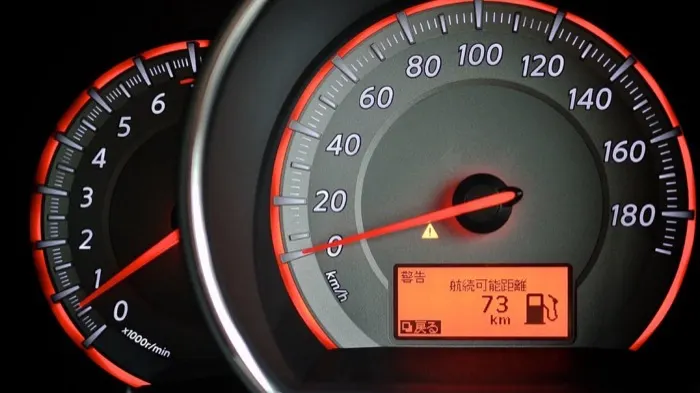
Hero image: “Low fuel warning light.” by MIKI Yoshihito. (#mikiyoshihito) (source), licensed under CC BY.