Driving Through Floods and Standing Water Safely
The safest approach to a flooded road is usually to turn around and find another route, as it is very hard to judge depth and currents from the driving seat. If you genuinely must cross shallow standing water, drive slowly and steadily in a low gear, keep going, and test your brakes gently afterwards.
When to turn back
The single most important rule is: if in doubt, turn around. You cannot reliably judge how deep flood water is, what the road beneath is doing, or how fast the water is moving, and getting it wrong can be fatal or write off your car.
Moving water is especially dangerous: surprisingly shallow flowing water can sweep a car away. If the water is moving, deep, or you simply cannot tell, do not chance it. Finding another route is always better than gambling.
How deep is too deep?
It does not take much water to cause serious trouble. As a rough guide, around 30cm (a foot) of moving water can be enough to float a car, and even less can stall the engine or hide a washed-out road surface.
Standing water deep enough to reach the bottom of the doors is already risky, and you cannot see potholes, missing manhole covers or debris beneath the surface. When in doubt, treat any significant standing water as too deep.
How to cross safely if you must
If the water is genuinely shallow and still, and you have no alternative, cross carefully.
- Wait for oncoming vehicles to clear so you have the shallowest part (usually the crown of the road).
- Drive slowly in a low gear, keeping the engine revs up and the speed steady.
- Keep moving without stopping, and do not create a bow wave that washes water into the engine.
- Leave space ahead so you do not have to stop in the water.
Why deep water wrecks engines
The biggest mechanical danger is water entering the engine through the air intake. If water is sucked in, it can cause hydraulic lock, where the engine seizes because liquid cannot be compressed, and that often means catastrophic, expensive damage.
This is why driving fast through deep water, or creating a big bow wave, is so risky, and why electric cars are not immune either, as deep water can still damage components. If your engine cuts out in water, do not try to restart it; get the car recovered and checked.
After driving through water
Once through, your brakes will be wet and less effective, so test them gently as soon as it is safe by dabbing the pedal at low speed. Light, repeated braking helps dry them out and restore normal performance.
Watch out too for reduced grip on wet, possibly muddy road afterwards. If the car behaves oddly, the engine runs roughly, or warning lights appear after a deep crossing, stop and have it checked, as water may have got somewhere it should not.
Be ready for Norfolk's wet roads
Norfolk's flat, low-lying landscape means roads can flood quickly in heavy rain, and rural lanes often have unmarked dips that fill with water. Heed road-closure signs and flood warnings rather than driving around barriers, which are there for good reason.
Keeping your tyres in good condition with plenty of tread helps you cope with the wet, surface-water driving that comes before and after a flood. We are happy to check your tyres and brakes so the car is ready for a wet Norfolk winter.
Frequently Asked Questions
How deep can water be before it is dangerous to drive through?
It does not take much: around 30cm of moving water can float a car, and even less can stall the engine or hide a washed-out road. Standing water reaching the door bottoms is already risky. If you cannot judge the depth or the water is moving, turn around rather than chance it.
How do I drive through a flood safely?
Only attempt genuinely shallow, still water with no alternative. Wait for oncoming traffic to clear, drive slowly in a low gear with the revs up and speed steady, keep moving without stopping, and avoid a big bow wave. Then test your brakes gently once through.
Why is deep water so bad for the engine?
Water can be sucked into the engine through the air intake, causing hydraulic lock, where the engine seizes because liquid cannot be compressed, often with catastrophic, expensive damage. That is why fast driving or a big bow wave in deep water is so risky. If the engine cuts out, do not restart it.
What should I do after driving through water?
Test your brakes gently as soon as it is safe, as they will be wet and less effective; light, repeated braking helps dry them. Watch for reduced grip afterwards, and if the car runs roughly or shows warning lights after a deep crossing, stop and have it checked.
Should I drive around a road-closed flood sign?
No. Road-closure signs and barriers are there because the flooding is dangerous or the road may be damaged or washed out beneath the water. Driving around them risks your life and your car. Find another route and heed flood warnings, especially on low-lying Norfolk roads.
Book With Norwich Tyres & Auto Service
Need a hand from a real, independent Norwich garage? Call 07933 900901 or pop into Ber Street, NR1 3ES. Same-day tyre fitting is available on most common sizes, with free parking on site.
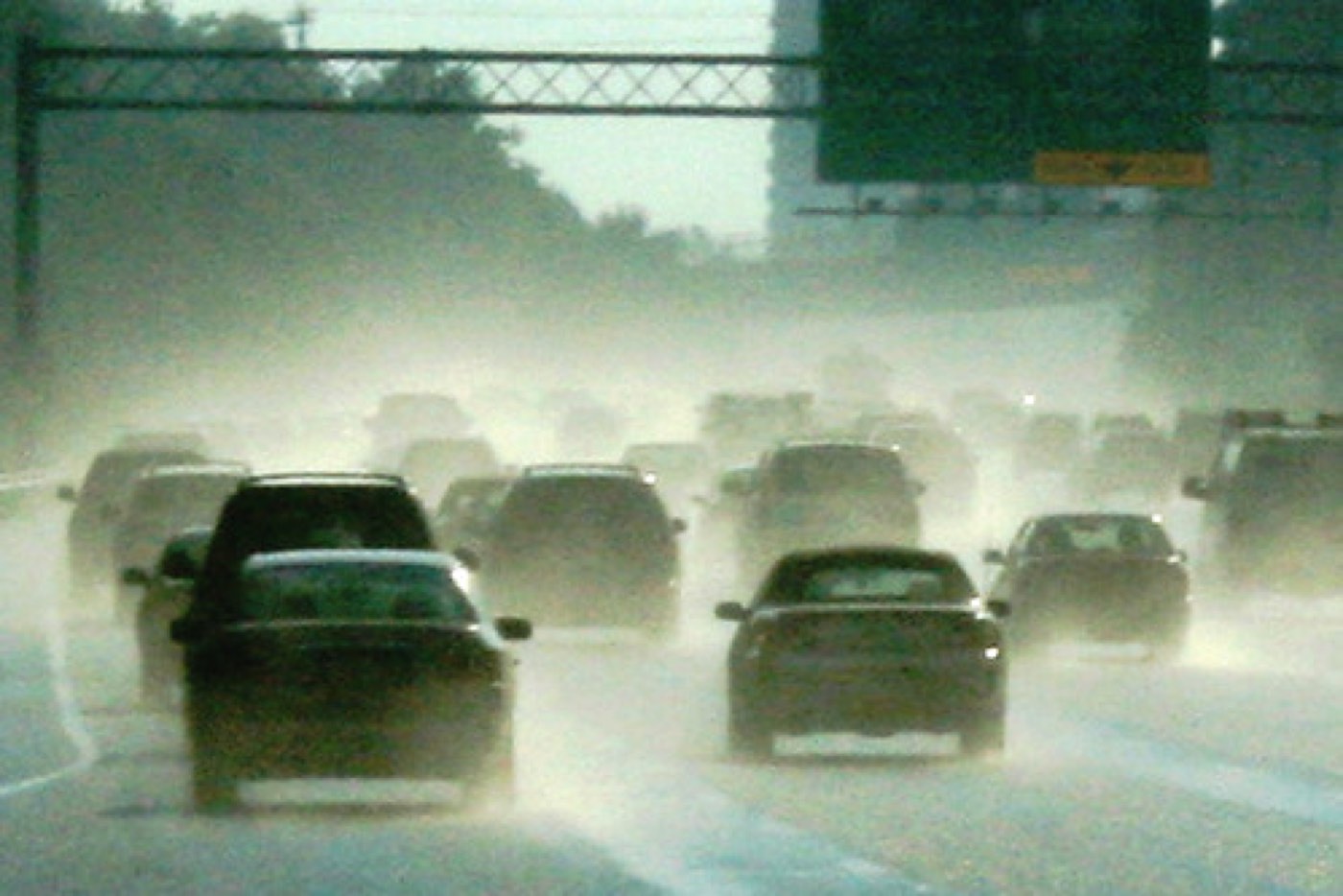
Hero image: “dangerous driving in the rain + tips” by woodleywonderworks (source), licensed under CC BY.